MARKET OUTLOOK
Molded fiber is growing
New market research points to continued growth for molded fiber packaging. But a growing market does not mean every player grows with it.
Molded fiber is growing. Who grows with it?
New market research points to continued growth for molded fiber packaging. But a growing market does not mean every player grows with it. The companies best positioned to benefit will be those willing to invest in the technologies, capabilities and product development needed to move fiber into more demanding applications.
Recent market research from Fortune Business Insights, highlighted by the International Molded Fiber Association (IMFA), values the global molded fiber packaging market at USD 9.10 billion in 2025 and projects it to reach USD 16.38 billion by 2034.[1]
The report points to food and beverage, e-commerce, plastic reduction initiatives and increasing demand for recyclable packaging as important drivers of that growth.[1]
For the fiber packaging industry, these are strong signals. But they should not be mistaken for a guarantee. A growing market creates opportunity, but it also raises expectations. As fiber moves into more applications, the industry will need to keep improving how it performs, scales and competes.


Growth will require more than capacity
The same research that predicts market growth also identifies several challenges that still need to be addressed: production economics, performance and a changing regulatory landscape.
Production economics remain important. Conventional molded fiber production involves pulping, forming and drying, making raw-material costs and energy use significant considerations.[1]
Performance is another area where development is needed. The report highlights moisture resistance, grease barriers and dimensional precision as challenges in applications where molded fiber competes with established plastic packaging formats.[1]
At the same time, regulation is raising the bar. In Europe, the Packaging and Packaging Waste Regulation introduces new requirements around recyclability, packaging reduction, recycled content and other aspects of packaging design, with important milestones beginning from 2030.[2]
2030 may sound distant. For packaging development, it is not.
New formats need to be designed, tested and validated. Materials and barriers need to be developed or selected. Production processes need to be industrialised. Supply chains, converting equipment and end-of-life considerations may all need to be addressed. That work takes time.
Molded fiber is not one single production method
The market today includes established approaches such as transfer molded and thermoformed fiber, while new technologies continue to emerge to expand where fiber can compete.[1] Dry Molded Fiber is one such approach.
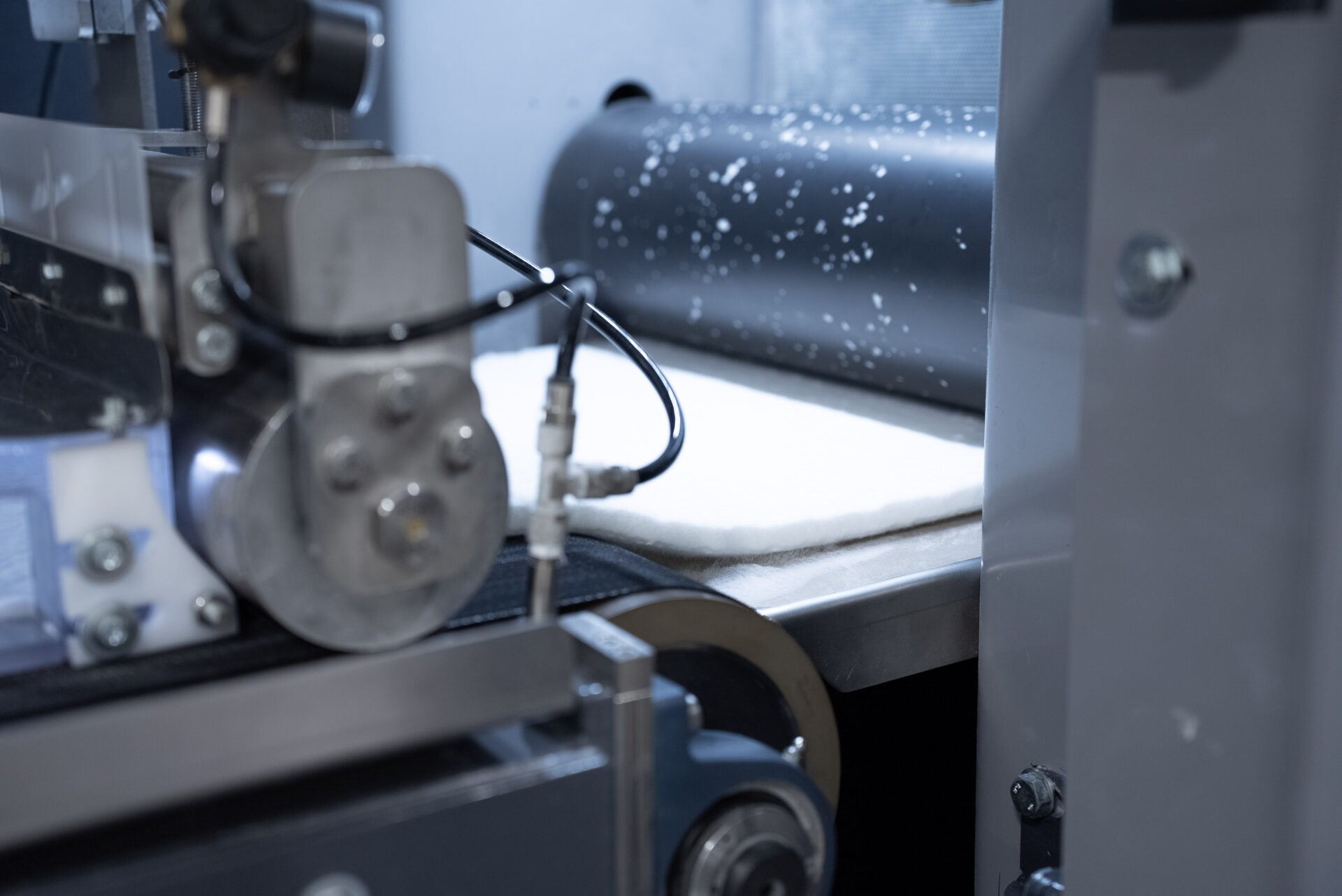
Instead of forming products from a fiber-and-water slurry followed by a drying step, Dry Molded Fiber starts with commercially available pulp. The pulp is mechanically milled and defibrated, and the separated fibers are air-laid into a dry fiber web that is then formed into three-dimensional products using heat and pressure.
The dry forming process offers another route to industrial fiber packaging, with a different resource profile from wet forming because there is no water-based slurry to dry.
It is not a universal replacement for plastic or for conventional molded fiber. And that is perhaps the more useful way to look at the technology.
The market will need different solutions for different applications, categories and production environments. What matters is understanding where each technology fits best, and doing the development work early enough to make that choice count.

The opportunity is real. So is the work
The molded fiber forecast is encouraging, but market growth alone will not move the industry forward. Progress depends on the work being done to solve the challenges that remain, and moving from concept to validated, industrial-scale production takes time.
Some applications will be well served by established molded fiber technologies. Others may require new barrier systems, new production methods or alternative forming technologies such as Dry Molded Fiber.
The companies that invest now in solving the remaining challenges around performance, efficiency and scale will be in a stronger position when demand accelerates further.
The market opportunity is clear. Which companies grow with it will depend, in part, on who is prepared to do that work now.
Sources
[1] Fortune Business Insights: Molded Fiber Packaging Market Size, Share & Industry Analysis, Regional Forecast, 2026–2034. Research recently highlighted by the International Molded Fiber Association (IMFA).
[2] European Commission: Packaging and Packaging Waste Regulation (EU) 2025/40.
More stories like this

Press release
Blister Pack Collective gains Papela’s converter business
PulPac today announces Papela’s participation in the Blister Pack Collective, the cross-industry initiative created by PA Consulting and PulPac to advance Dry Molded Fiber blister packaging.
26 August 2026